
The busiest rooms in a home — nurseries, kids' rooms, guest-rooms-slash-offices — hold the most stuff and can least afford to show it. A hidden wardrobe wall solves both sides at once: floor-to-ceiling closed storage, finished flush like the wall itself, that swallows a room's worth of belongings while the room pretends to hold nothing.
Why it works
Flush, handleless, full-height fronts read as architecture rather than furniture, so the eye subtracts them from the room. A wall of storage in the wall's own color makes a room look emptier than a single open bookcase would.
Closed storage is also the only kind that survives rooms whose contents churn. A nursery's inventory changes monthly; behind doors, that churn is invisible — the room's calm no longer depends on the shelves being styled.
Full height is the quiet multiplier: the space above head height, wasted by freestanding wardrobes, becomes the rotation layer — next sizes, other seasons, keepsakes — exactly the stock that busy rooms need close but not underfoot.
How to do it
Step 1
Choose the room's least interrupted wall — no windows, ideally no sockets to relocate — and plan storage floor to ceiling across its full width.
Step 2
Set the depth by contents: 60cm internal for adult hanging, 45–50cm if the wall will hold mostly shelves, bins and children's clothes.
Step 3
Specify flush handleless doors with push-to-open or finger-groove openings, finished in the wall's paint color or continuing its panelling.
Step 4
Fit the interior in thirds — adjustable shelving, hanging with a double rail for small clothes, and deep drawers or bins for the bulky and awkward.
Step 5
Reserve the top shelf for labelled rotation boxes: next size up, off-season, keepsakes. Label fronts, not lids, so the boxes never need taking down to identify.
Step 6
Keep one 'live' shelf at working height completely free — the landing zone for the current week's churn that would otherwise colonize the floor.
Step 7
Re-set the interior each season: rotate boxes down, cull outgrown items into a donate bag kept inside the wall itself.
Keep organizing
- The Mudroom Drop-Zone System
- Built-In Home Office Storage That Hides the Clutter
- The hidden nursery wardrobe wall pictured here
Hand-picked guides and room designs that pair well with this project.
Frequently AskedQuestions
Floor-to-ceiling doors with no visible handles or frame, finished in the room's wall color or panelling, opened by push-latch or finger groove. The eye reads it as wall, so the room looks nearly empty while storing everything.
60cm internal for hanging adult clothes; 45–50cm works for shelving, bins and children's clothes. In a nursery, a 50cm wall is often the right trade — you lose almost no floor and keep full-height storage.
Thirds: adjustable shelving for the changing stack of essentials, double rails for small hanging clothes, and deep bins for bulky items. Keep next-size-up clothes in labelled boxes on the top shelf so growth spurts don't create chaos.
Yes, and it is often better than handles — nothing to catch on or climb. Add soft-close hinges and, for young children, child locks on the cabinets holding medicines or products; the flush front hides those too.
Get the look
Room Designsto Steal

A Hidden Nursery Built Into a Fluted Wardrobe Wall
July 21, 2026
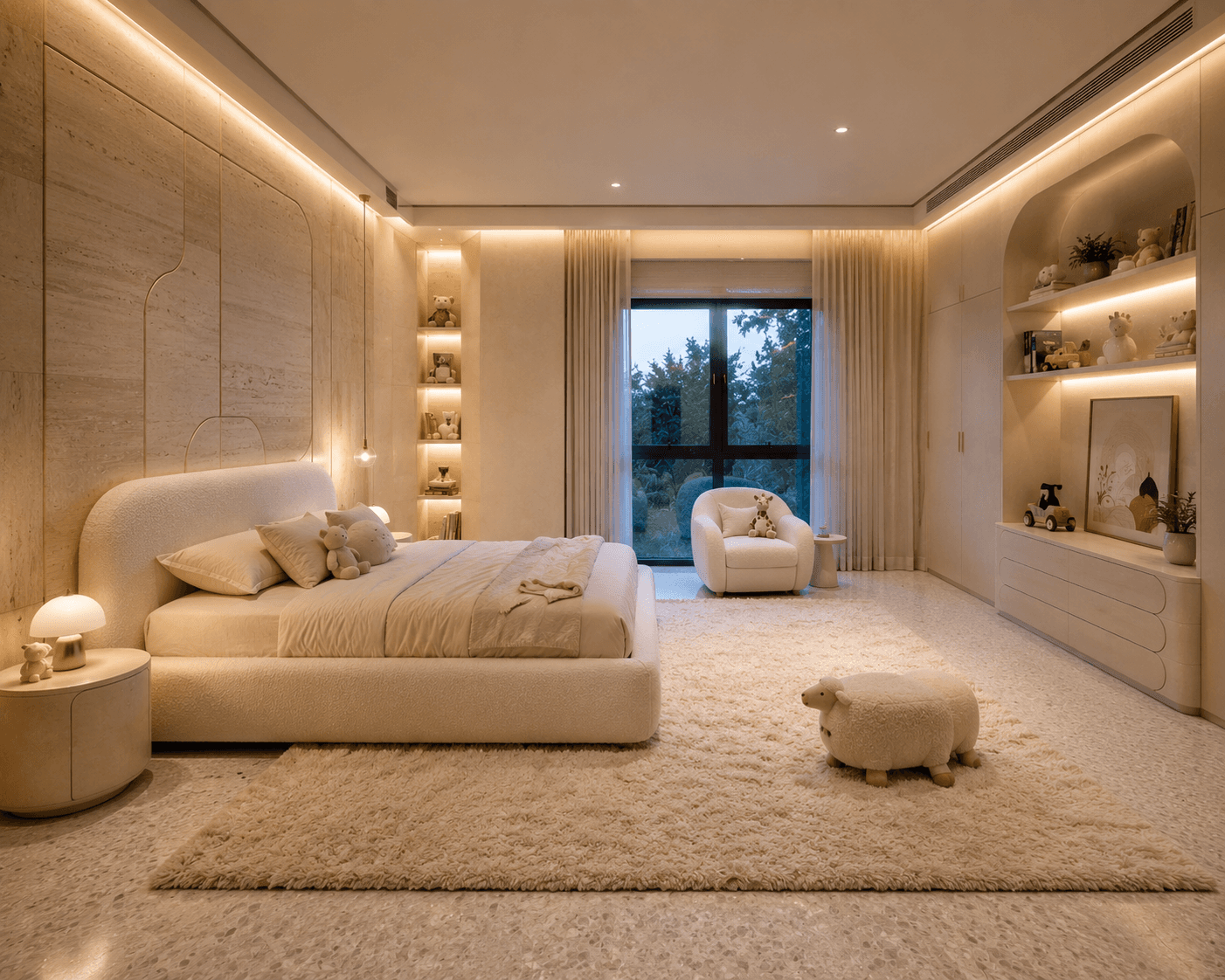
A Serene Cream Kids Bedroom in Boucle and Travertine
July 21, 2026
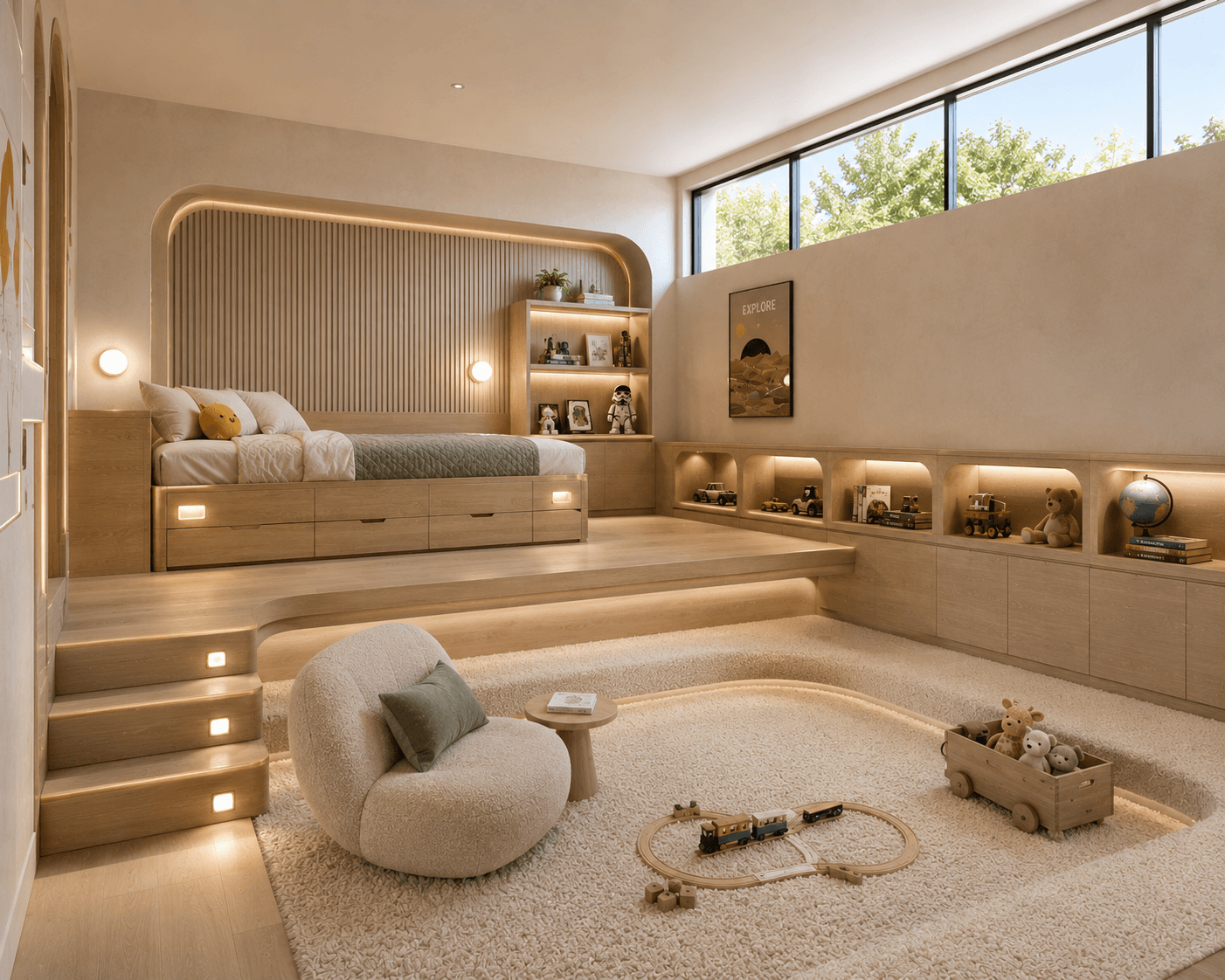
A Kids Room with a Platform Bed and Sunken Play Pit
July 21, 2026
Join the conversation
Share your thoughts on this room.